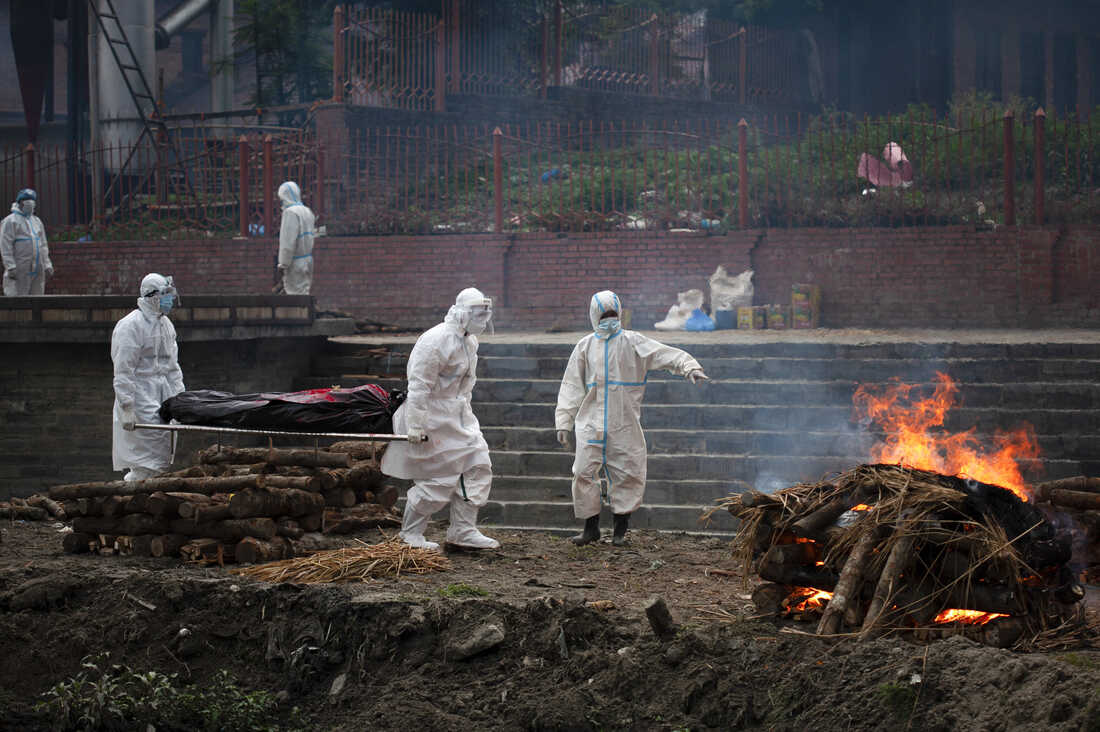
The health system of Nepal reflects the paradox of constitutional commitments to universal care and persistent structural weaknesses. Despite progressive guarantees of free health services, chronic underfunding, workforce shortages, and administrative ambiguities undermine effective delivery. Federal restructuring has complicated governance, while geographic disparities exacerbate inequities between rural and urban populations. Progress toward global health goals remains uneven—maternal mortality has declined, yet malnutrition and disease burdens persist. Fragmented health information systems further hinder evidence-based planning, leaving Nepal’s health sector caught between aspiration and systemic constraint.
1. Background and Context
1.1 Nepal’s Health System Prior to COVID-19
Nepal is a low-income landlocked country in South Asia with a population of 30 million people. The health system of Nepal is organized into a three-tier system of primary health care centers, district hospitals, and referral hospitals. Despite the progressive provisions of free health care to all Nepali citizens as provided for in the 2015 Constitution of Nepal, the health system of Nepal has always been challenged by issues of inadequate funding and geographic disparities between the urban and rural areas.
Before the COVID-19 pandemic, the country spent only around 5-6% of its national budget on health, which was far from the Abuja Declaration target of 15%. The density of health workers was less than 0.7 physicians per 1,000 population, while shortages persisted in the number of qualified nurses, lab technicians, and public health specialists. The federal restructuring of the country’s government, completed in 2017-2018, added another layer of confusion to the country’s health system, creating ambiguity in the roles and responsibilities of the federal, provincial, and local governments.
Nepal’s Sustainable Development Goal health status was mixed, including the significant reduction in maternal mortality, but also an increase in the prevalence of malnutrition, communicable, and non-communicable diseases. The country’s health information system was fragmented, with poor data integration between the government and non-government sectors, making it difficult to monitor the situation in real time.
1.2 COVID-19 Policy Context in Nepal (2020–2022)
With the COVID-19 outbreak in early 2020, the first reported case was recorded on 23rd January 2020, marking the first reported COVID-19 case in South Asia. In response, the Nepalese Government declared a nationwide lockdown on the 24th of March 2020, which was one of the most stringent lockdowns in South Asia, staying in force till July 2020. The recent COVID-19 waves, including the severe second wave recorded during April-June 2021 due to the Delta variant, have put the country’s healthcare infrastructure, already in a critical condition, to extreme test.
The Nepalese Government has put in place several health policies and operational guidelines, including the COVID-19 Health Sector Emergency Response Plan 2020, the National Preparedness and Response Plan (NPRP), the COVID-19 vaccine roll-out strategy through COVAX Facility, bilateral procurement, guidelines on the management of COVID-19 cases including quarantine, isolation, contact tracing, and treatment, among others. The implementation of the policies, however, has been extremely problematic on several fronts.
2. Problem Statement
Despite the development of comprehensive health policies at the national level during the COVID-19 pandemic, there has been a considerable and well-documented disconnect between health policies and their implementation. Such disconnects occurred at systemic, administrative, socio-economic, and geographical levels, leading to unequal service delivery, delayed service provision, hospital overload, and increased mortality rates.
The second wave of COVID-19 infections that occurred during 2021 highlighted some of the major disconnects between health policies and their implementation. Such disconnects include oxygen supply crises faced by tertiary hospitals, a complete breakdown of contact tracing efforts, inconsistent quarantine policies at border points, and the complete omission of marginalized groups such as the indigenous peoples (Janajatis), Dalits, and people living in hill and mountain districts from the initial immunization drives. Such disconnects are not explained by a lack of resources but by systemic failures at a deeper level.
Critically, the federal restructuring of the Nepalese state in 2015 led to the formation of a three-tier government system that is constitutionally correct but lacks the operationalized coordinating structures for responding to public health emergencies. The roles and responsibilities for health were constitutionally delineated across the federal, provincial, and local levels of government; however, the institutional capacities and financing and human resource bases for effective decentralized responses were not proportionately devolved.
2.1 Systemic and Structural Gaps
- Underfunding of health infrastructure and emergency preparedness systems
- Segmentation of health information management hindering real-time surveillance
- Inadequate supply chain management of essential medicines, PPEs, and medical oxygen
- Linkages between the formal system and private/NGO health service providers
2.2 Administrative and Governance Gaps
- Vagueness of health responsibility between the federal, provincial, and local governments
- No coordination mechanism between governments during the pandemic phases
- Bureaucratic lags in procurement, policy changes, and mobilization of resources
- No systems of accountability to track implementation fidelity
2.3 Socio-Economic and Geographic Gaps
- Disproportionate impact on remote mountain and hill districts with limited road connectivity
- Digital divide hindering online health information search, online vaccination registration, and telemedicine
- Socio-economic vulnerabilities of migrant labor, informal sector labor, and women-headed households
- Linguistic and cultural barriers hindering health communication of indigenous and Madhesi populations
3. Research Objectives and Questions
3.1 General Objective
To carry out a systemic and evidence-based analysis of the gaps between health policy design and implementation of COVID-19 health policy in Nepal from 2020 to 2022, and to identify structural, administrative, socio-economic, and geographic factors influencing health policy implementation gaps.
3.2 Specific Objectives
- To identify and critically analyze significant COVID-19 health policies developed by the Government of Nepal and assess their intended implementation frameworks.
- To identify and characterize major implementation gaps observed during health policy implementation at the federal, provincial, and local levels.
- To assess the implications of inter-governmental coordination and governance on health policy implementation.
- To evaluate the implications of health policy implementation gaps on socio-economically vulnerable and marginalized populations, including indigenous peoples, Dalits, rural populations, and women.
- To develop policy recommendations on how health policy implementation gaps could be addressed to strengthen health systems’ resilience for effective response to future health crises.
4. Literature Review
4.1 Health Policy Implementation in Low- and Middle-Income Countries
The subject of health policy implementation in low- and middle-income countries (LMICs) has been greatly influenced by the pioneering work of Lipsky (1980), which focused on the concept of street-level bureaucracy. The author pointed out the importance of health workers as de facto health policy-makers. Other researchers, such as Walt and Gilson (1994), have contributed significantly to the subject through the development of the Health Policy Triangle framework, which focuses on the interrelations between content, context, process, and actors in health policy implementation.
Gilson (2012) and colleagues have built on the subject by developing the concept of a people-centered approach to health policy analysis, which focuses on the importance of power relations, social norms, and culture in health policy implementation. In the context of LMICs, Erasmus and Gilson (2008) have shown that even good health policies face the challenge of implementation deficits due to inadequate attention to contextual factors, such as political economy, in health policy implementation.
Most recently, the field of implementation science has developed a significant literature on factors influencing or hindering the implementation of evidence-based health interventions into practice. Theoretical frameworks, such as the Consolidated Framework for Implementation Research (CFIR) developed by Damschroder et al. (2009), the Exploration, Preparation, Implementation, Sustainment (EPIS) model by Aarons et al. (2011), and the Implementation Outcomes Framework by Proctor et al. (2011), offer researchers tools for analyzing implementation processes at multiple levels of health systems.
4.2 COVID-19 Response in Nepal
The body of academic and policy literature on Nepal’s COVID-19 response has identified a complex interplay of political, institutional, and epidemiological factors influencing response efforts. Bhandari et al. (2021) was one of the earliest studies on COVID-19 response preparedness in Nepal, identifying critical gaps in diagnostic capabilities, health workforce training, and hospital bed availability. Their analysis found that Nepal was not only ill-prepared for COVID-19 but had fewer than 800 ICU beds and fewer than 500 ventilators functioning for its population of 30 million when the pandemic began.
The political aspects of the response in Nepal have also been studied by Subedi et al. (2021), who pointed out the impact of political changes in the country. Nepal had four prime ministers in the two-year period from 2020 to 2022. This impacted the implementation of health policy in the country. Dhungana et al. (2022) have also pointed out the impact of the second wave on peripheral health facilities in the country, where there were inadequate supplies of oxygen concentrators, trained clinical staff, and medication.
The literature on the vaccination drive in Nepal points out several equity-related issues in the vaccination drive. Shrestha et al. (2022) pointed out the impact of geographic remoteness and digital literacy and trust deficits, fueled by misinformation, which impacted the vaccination drive in the country. The initial decision to vaccinate frontline workers in urban centers left the elderly in the rural areas vulnerable to the impact of the second wave of the pandemic.
4.3 Implementation Science Frameworks
The current research has a strong theory base supported by three implementation science models that are used to guide the research design. First, the World Health Organization’s Health Systems Building Blocks Framework (2007) is a structural approach to analyzing the underlying factors that affect implementation capacity within a health system, including service delivery, health workforce, health information systems, essential medicines, health financing, and leadership and governance. This framework helps identify implementation problems across different functional domains of a health system.
Second, the policy implementation gap framework was first proposed by Edwards (1980) and later expanded by Pressman and Wildavsky (1984). This framework is a political science approach to understanding the factors that affect policy implementation outcomes. The concept of ‘implementation deficit’ or the accumulation of small implementation problems at each stage of policy implementation is particularly relevant in a federated political system such as Nepal’s, where policies have to pass through different levels of governments before they are implemented at the grassroots level.
Third, the Governance Analytical Framework, as proposed by Hufty (2011), offers instruments for analyzing the contribution of norms, actors, nodal points, and processes to the outcomes of policy governance. The framework is particularly useful in analyzing the effects of inter-governmental coordination failures between Nepal’s federal, provincial, and local governments.
- Methodology
5.1 Research Design
The research will adopt a convergent mixed-methods research design. This research design will combine qualitative and quantitative research approaches. The mixed-methods research approach will be epistemologically justified by the multidimensional nature of the research problem. The research problem will require the statistical characterisation of the results of health policy implementation across geographic and demographic strata. This will necessitate the adoption of a quantitative research approach. In addition, the research problem will require the interpretive understanding of health policy processes and actor perspectives. This will necessitate the adoption of a qualitative research approach. The research will be conducted through three sequential research phases. The research will start with a document analysis research phase. This will be followed by a field research phase. The research will also have an integration and synthesis research phase.
5.2 Data Sources
| Data Source | Description and Rationale |
| Policy Documents | Official government plans, guidelines, circulars, and administrative orders from the Ministry of Health and Population (MoHP), provincial health directorates, and local government health offices (2019-2022) |
| Key Informant Interviews | In-depth semi-structured interviews with policymakers from the MoHP and National Health Research Council, provincial health directors, district public health officers, front-line health workers, and community health volunteers |
| Focus Group Discussions | Structured discussions with community members in selected districts stratified by province, geographic zone, and demographic groups such as women, Dalits, and indigenous populations |
| Household Survey | Structured questionnaire for a representative sample of populations in selected purposively selected districts to collect information on self-reported experiences of access to health services and vaccines and any barriers faced |
| Administrative Datasets | Data from HMIS (Health Management Information System) on COVID-19 cases and deaths, vaccination coverage from Immunisation Division of MoHP, hospital capacities |
| Gray Literature | Situation reports from WHO Nepal Country Office, UNICEF, UNFPA, Oxfam, Save the Children, and research institutes |
5.3 Sampling Strategy
The sampling method will be based on the multi-stage purposive sampling approach, which will allow for the maximization of geographic, demographic, and institutional diversity.
Geographic Sampling
Four out of the seven provinces in Nepal will be selected for the study, representing different geographic typologies, including the COVID-19 impact profiles. These provinces will be the Bagmati Province, the COVID-19 epicenter; the Madhesh Province, representing the Terai region where the risk of transmission due to international borders is high; the Karnali Province, representing the remote mountain region, where the vulnerability to COVID-19 is the highest; and the Lumbini Province, representing the mixed geographic regions, including the mid-hills and the Terai region. In each province, two or three districts will be selected based on the COVID-19 incidence rate, vaccination rate, and density of health facilities.
Interview Sampling
The study will be based on the use of key informant interviews, estimated to be around 60-80, using the purposive sampling method, including the snowball sampling approach, where the respondents will include senior policymakers, provincial health authorities, district health authorities, hospital authorities, health workers, community health workers (Female Community Health Volunteers, FCHVs), and civil society organization representatives. The sampling will be continued
Survey Sampling
A stratified random survey of approximately 1,200 households will be used, with approximately 300 households from each of the four provinces included in the study. One respondent from each household will be interviewed using a structured questionnaire.
5.4 Data Collection Methods
- Semi-structured interview: Interviews will be carried out in Nepali or local dialects with the help of interpreters, audio recorded, and transcribed verbatim.
- Focus group discussions: These will be carried out by local researchers, with each group consisting of 6-10 respondents, with an estimated 20 FGDs.
- Systematic document collection: Systematic document collection will be carried out from government sources, official websites, and archiving.
- Systematic extraction of quantitative data: Quantitative data will be extracted from HMIS and COVID-19 administration data sources.
5.5 Analytical Framework
Qualitative Analysis
Data from interviews and focus group discussions would be analyzed through a process of reflexive thematic analysis following the six-phase approach of Braun & Clarke (2006, 2021). Themes would be derived from the data through an inductive approach and would also be deductively derived from the theoretical frameworks presented in Section 4.3 of this dissertation. Narrative Policy Analysis would be employed for analyzing data from document reviews.
Quantitative Analysis
Data from surveys would be analyzed through a process of descriptive and inferential analysis, including logistic regression models to identify predictors of health service utilization and vaccine uptake. Data from HMIS would be analyzed through an interrupted time series analysis to identify the impact of specific policy interventions on health service utilization patterns. STATA 17 and R would be employed for data analysis.
Integration and Synthesis
The qualitative and quantitative results would be integrated through a convergent synthesis approach by applying data transformation and joint display. In this approach, areas of convergence, complementarity, and divergence would be identified. The integrated results would be interpreted by applying the WHO Health Systems Building Blocks Framework and the Policy Implementation Gap model.
6. Significance of the Study
This piece of research also offers several important contributions to knowledge and practice at the national and international levels.
Firstly, this research promises to contribute to the body of knowledge by undertaking the first systematic and comprehensive mixed-methods investigation of COVID-19 health policy implementation gaps in Nepal across multiple provinces. Currently, the literature on COVID-19 health policy responses in federal LMIC contexts is dominated by studies conducted at the national level and through desk-based reviews or localized investigations without systematic comparative analysis at the provincial and population levels.
Secondly, this investigation promises to make an important contribution to the body of knowledge on health policy and practice at the national and international levels by undertaking an empirical and theoretical investigation of the interplay between the distinctive characteristics of Nepal’s federal system of government, as a post-conflict state with a novel constitutional settlement and a unique three-tier system of government.
Third, the equity-focused analysis of differential implementation impacts will yield evidence for the Government of Nepal, provincial health authorities, and development partners on which populations need to be targeted for effective interventions to ensure access to health services in any future emergency events. This directly feeds into Nepal’s obligations under the IHR (2005) and the UHC component of the SDGs.
Fourth, the policy recommendations that emerge from the findings of this research will feed into the formulation of the next cycle of the National Health Policy for Nepal and contribute to the post-COVID lessons-learning processes being undertaken by the Government of Nepal’s Ministry of Health and Population, WHO Nepal Country Office, and global health security partners.
7. Ethical Considerations
The research will be carried out in strict adherence to the ethical standards outlined in the Declaration of Helsinki, Belmont Report, and the National Ethical Guidelines for Health Research of Nepal (NEHRC, 2011, revised 2019). Ethical approval will be sought from the Nepal Health Research Council (NHRC), and if deemed necessary, the relevant ethics committees of the partner international institutions will also be approached.
7.1 Informed Consent
Informed consent will be sought from all the participants of the research. The participants will be fully informed of the purpose of the research, the procedure of the research, the possible risks and benefits of the research, and their right to withdraw from the research at any point of time. Informed consent will be sought in writing from all the participants of the interviews and focus groups. In the case of participants of the household survey with low levels of literacy, verbal consent will be sought in front of a witness.
7.2 Confidentiality and Anonymity
Data collected through interviews and focus group discussions will be anonymized before the analysis. Participants’ identifying information will be replaced with alphanumeric codes, and the codes and the anonymized data will be kept in separate files in password-protected and encrypted files. Quotes from policymakers and senior officials who have expressed consent to be named in the final publication will be attributed to the role rather than the individual. Community-level findings will not be presented in a way that reveals individual communities or households.
7.3 Data Protection and Storage
All digital forms of data will be stored in encrypted servers accessible to the core team members. Audio recordings of the interview data will be deleted after transcription. Survey results will be stored in password-protected databases. Physical copies of the consent forms will be kept in locked filing cabinets in the principal institution. A data management plan will be prepared and shared with the NHRC. The data will be kept for seven years after publication in accordance with general principles of data management in the academic community.
7.4 Researcher Positionality and Power Dynamics
The research team recognizes the power dynamics inherent in the research process when working with community members, frontline health workers, and vulnerable populations. Reflexivity procedures have been built into the entire research process. This includes regular debriefing sessions, reflexivity journals, and member checking of qualitative findings. Community advisory groups will be established in each province to oversee the entire research process and provide feedback on emerging findings.
- Limitations
The study recognizes several potential limitations of the research, which could impact the reliability, validity, and generalizability of the findings.
- Data availability and quality: The quality of data in the health information systems in Nepal, including the HMIS, has been recognized as incomplete or poorly maintained in some provinces or districts. Similarly, the administrative data on COVID-19 cases may not reflect the actual situation due to the lack of testing capacity. The research team will be able to address this using data triangulation methods.
- Recall bias: The retrospective nature of the study, where policymakers, health staff, or individuals will be interviewed about events that occurred during 2020-2022, makes the study vulnerable to recall bias. The research team will be able to address this using document analysis, where the events will be verified based on the situation during the period.
- Social desirability bias: Individuals holding key informant roles, particularly those holding governmental roles, may be unwilling to critically evaluate policy failures and/or inter-institutional conflicts. This will be addressed through the creation of a psychologically safe environment, indirect questioning, data triangulation, and anonymity.
- Geographic sampling limitations: Although this study has included four of the seven provinces, its findings may not be entirely generalizable across all seven, specifically Gandaki, Bagmati urban areas, and Koshi provinces. The rationale behind selecting each of these provinces will be established transparently, and their findings will be appropriately qualified on their generalizability.
- Language and translation: The use of multiple languages for data collection, translation, and back-translation for Nepali, Maithili, Tharu, and other local languages will also carry the risk of losing equivalence. Standardized translation, back-translation, piloting the instruments, and using embedded interpreters will be the tools to mitigate this risk.
- Political sensitivity: The research will be dealing with politically sensitive issues, including the accountability of the government and the failure of institutions. There will be cases where respondents will be unwilling to participate or will censor their answers. The research will be conducted with strict political neutrality, the emphasis will be on the academic and policy improvement purpose, and the research will be conducted through civil society or academic intermediaries.